


Table of Contents
ToggleApple Authorised vs IRP : What They Don’t Tell You
If your MacBook suddenly dies or cracks a screen in Subang Jaya, searching for a fix brings up a confusing wall of terms. You will see shops claiming to be “Apple Authorised Service Providers,” others flashing an “Independent Repair Provider (IRP)“ badge, and 3rd party specialists operating entirely on their own terms.
Most consumers think an Apple verified badge guarantees the best technical outcome. In reality, these certifications dictate how a shop is allowed to repair your machine, and they often place strict limits on data recovery and logic board repairs.
Quick Summary:
Authorised Service Providers (AASP): The official route for active warranties and AppleCare+ claims. They only swap entire multi component modules, which usually wipes your data.
Independent Repair Providers (IRP): Independent shops with access to some official diagnostic software and parts, but they are bound by strict Apple rules that forbid micro soldering or chip level board repairs.
Independent Specialists: Completely unrestricted. We diagnose and repair down to the individual microscopic capacitor on your existing board, preserving your files and saving you from paying for massive, unnecessary part replacements.
The Three Tiers of Apple Repair in the Klang Valley
Navigating the local repair landscape means understanding that not all technicians have the freedom to solve root causes. The market is divided by contracts.
On one end, you have corporate backed centres that follow a rigid factory script. In the middle, you have shops using official status to build consumer confidence while accepting restricted access. On the other end are independent diagnostic labs.
Choosing between them isn’t about finding who has the prettiest store front in KL or Subang; it is about matching your specific failure symptom to the right technical methodology.
Apple Authorised Service Centres: The Warranty Route
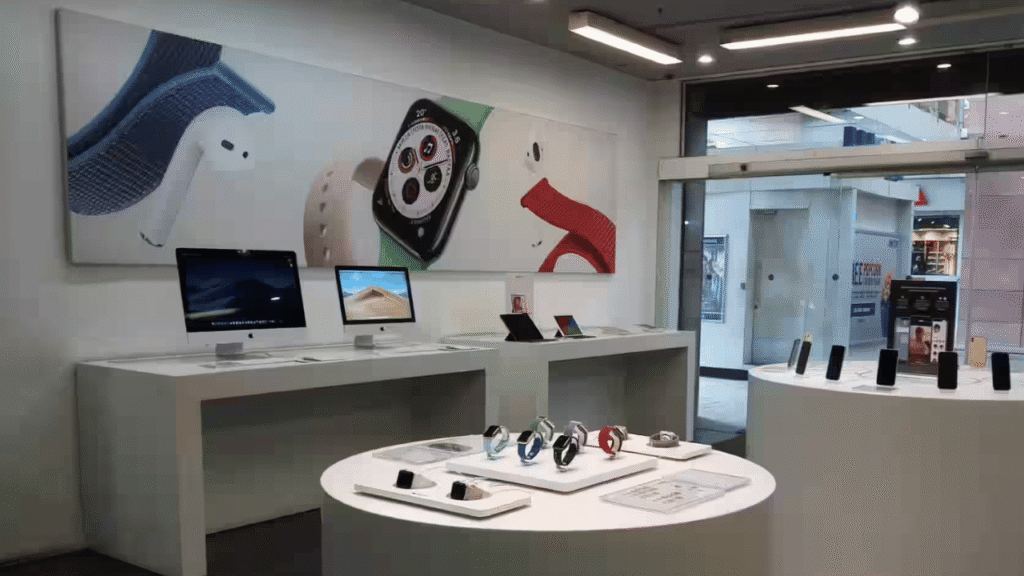
An Apple Authorised Service Provider (AASP) operates as a direct extension of the Apple Store. They use identical diagnostics and are paid by Apple to process valid warranty claims.
If your MacBook is less than a year old or covered under an active AppleCare+ plan, this is your definitive destination. Covered structural defects cost you nothing here, and accidental drops are handled for a flat excess fee.
However, if your device is out of warranty, the financial math changes instantly. AASP are contractually prohibited from fixing individual components; they can only replace massive, factory sealed hardware assemblies.
The Independent Repair Provider (IRP) Badge: What It Actually Means
The IRP program was introduced by Apple to allow independent businesses access to genuine parts, diagnostic manuals, and system configuration software. Large volume operations in Malaysia lean heavily on this badge to build mass trust.
While an IRP shop can buy authentic Mac batteries and screens directly from Apple, they must also submit to Apple repair tracking ecosystems. They are required to log device serial numbers and, in many cases, hand over old components back to the factory. This status is excellent for standard out of warranty part swaps, but it comes with invisible technical strings.
Why “Apple Certified” Shops Are Banned from Board Level Repairs?
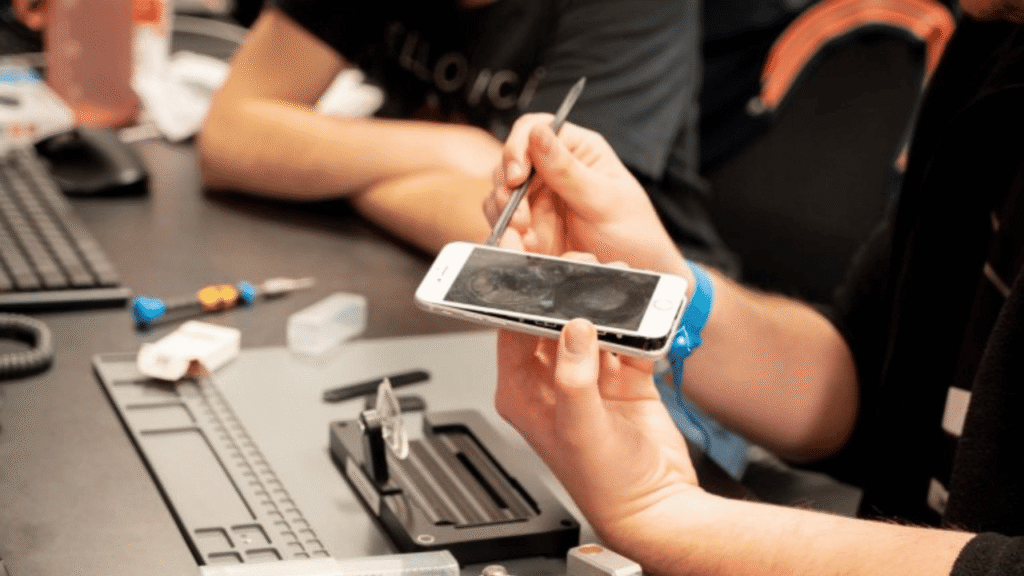
Here is the technical reality that corporate marketing hides: The moment a repair shop signs Apple IRP contract, they are strictly barred from performing component level micro soldering on logic boards.
If a customer walks into an IRP branch with a MacBook that won’t turn on due to a single shorted capacitor on the main power line, that shop cannot fix the capacitor. Under their contract, they are required to quote you for a full logic board replacement.
Because swapping an entire motherboard is drastically more expensive than replacing a single power controller chip, the customer ends up paying a premium simply because the shop’s hands are legally tied by the manufacturer.
Solder vs. Swap: The Apple Silicon Storage Dilemma
On modern Apple Silicon MacBooks (M1 through M5 models), the solid state storage (SSD) chips are permanently soldered onto the logic board. They are no longer removable sticks.
If you fill up your 256GB storage drive and need an upgrade, or if a single storage NAND chip suffers an electrical failure, an official or IRP shop has only one solution: replace the entire logic board. This costs thousands of Ringgit and fundamentally alters your machine’s identity.
Independent diagnostic specialists work outside these artificial walls. A true component-level technician can cleanly desolder the factory storage chips under a microscope and replace them with high-capacity, upgraded storage modules, reprogrammed to boot perfectly. This type of deep engineering is physically impossible within official or IRP repair frameworks.
Data First Diagnostics: Why Saving Your Files Requires Complete Independence
The biggest risk of sending a dead Mac through official or corporate certified channels is the automatic loss of your data.
Because AASP and IRP chains prioritize standardized modular replacements, their diagnostic software requires a factory system configuration reset when a new board is installed. Your original data is treated as collateral damage. They will explicitly ask you to sign a waiver acknowledging that your files will be permanently deleted.
A data first independent specialist acts under a completely different philosophy. We treat the logic board as a recoverable asset. By mapping out power rails with a multimeter and tracing signal line shorts, we focus on reviving the specific circuits that supply electricity to your storage chips. This lets us pull your data securely, even if the rest of the physical laptop chassis is written off.
Why More Outlets Do Not Equal Better Troubleshooting?
High volume repair operations across KL and Selangor often market themselves based on physical convenience, boasting multiple branches across different malls.
While multiple locations are great for dropping off a phone with a cracked screen, it does not change the physics of micro electronics. Complex motherboard diagnostics cannot be mass produced on a factory conveyor belt.
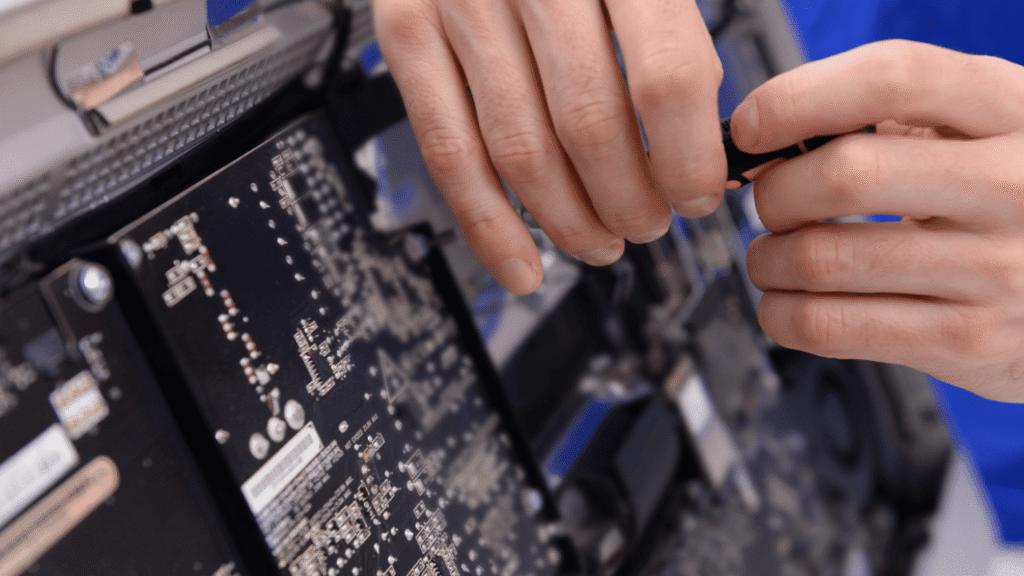
The technician working under a microscope needs years of dedicated diagnostic logic, schematic reading experience, and steady hands. When an operation expands into a massive retail footprint, the elite diagnostic talent gets diluted. Your machine is often handled by a junior part swapper, while the truly complex work is quietly centralized or outsourced.
At OrangeFix, we do not focus on having a storefront on every corner. We focus on keeping the master diagnostic technician right in front of you, where the actual work happens.
Cheap Quotes vs. Real Value: The Hidden Cost of Trial and Error Fixes
On the opposite side of the corporate chains are the ultra cheap repair stalls fighting a pricing war to the bottom. They will quote incredibly low prices over WhatsApp without ever seeing your machine.
This approach relies entirely on guessing. Because they lack the diagnostic gear or patience to trace a fault, they will blast a dead logic board with a heat gun to see if the solder points reconnect by luck.
This trial and error method often backfires. Overheating a multi layered Apple circuit board warps the internal traces, turning a highly repairable power fault into a permanently destroyed piece of scrap metal.
In our 18 years of experience, the most expensive repairs we handle are the ones where another shop tried a cheap shortcut first and killed the customer’s data in the process.
How to Choose: When to Go to Apple and When to Visit a Specialist?
To get the best outcome for your Mac and your wallet, use this logical breakdown before making a trip:
-
Choose an Apple Authorised Centre if: Your Mac is under a standard 1 year warranty, you have active AppleCare+, or your corporate asset policy strictly mandates official manufacturer paperwork.
-
Choose an IRP Chain if: Your machine is out of warranty, you only need a basic battery or screen replacement, and you are comfortable paying a higher premium for a certified serial matched component.
-
Choose an Independent Diagnostic Specialist if: Your Mac suddenly won’t turn on, it has suffered a liquid spill, you desperately need to save your files, or you want an honest, evidence based assessment of a motherboard fault without being forced into an expensive whole board replacement.
Frequently Asked Questions:
Q: Is every part used by an IRP shop original Apple quality?
A: No, it is not. Apple allows IRP shops to buy and use 3rd party aftermarket parts to keep their prices low. Many consumers think the badge means 100% genuine factory parts for every job. In reality, an IRP can put a normal non genuine battery or screen inside your Mac. You only get real Apple parts if you specifically ask for them and pay the very high official factory price.
Q: How many days do you need to fix a MacBook motherboard?
A: A proper check and fix cannot be done in a few hours.
To check the board: We need 1 to 2 working days to look under the microscope and trace the power lines.
To repair the circuit: It takes another 1 to 3 working days to solder the new micro chips safely. Big shops often promise same day repairs because they want quick business, but they usually just swap your whole board or skip the final stress tests.
Q: Will my files get deleted during the repair?
A: If you go to an Apple authorised centre or an IRP chain, yes, they usually wipe your data. Their software tools require a full system reset when they swap big components. They will even ask you to sign a form agreeing to data loss. Because our approach is data first, we repair the exact broken circuits on your existing board. Your hard drive stays untouched, so your files remain safe.
Q: Will Apple block my MacBook if an outside shop repairs it?
A: No. If your Mac is out of warranty, your factory coverage is already finished anyway. Apple cannot lock or block your computer just because an independent technician fixed it. The only risk is if an inexperience shop uses a cheap heat gun and permanently burns the main board. If that happens, nobody can save your data or your Mac.

About The Author
This article is written with input from Kevin, who has 18 years of hands on experience in MacBook repair, logic board inspection and Apple device care. Kevin and the OrangeFix team are also daily Apple product users, so every guide is written from real repair experience and practical user understanding.
Kevin has shared his repair knowledge through a CityPlus FM radio interview and has also been featured twice in The Star for gadget care, water damage advice and digital decluttering tips.
OrangeFix is an independent repair centre in SS15, Subang Jaya, and is not affiliated with Apple.